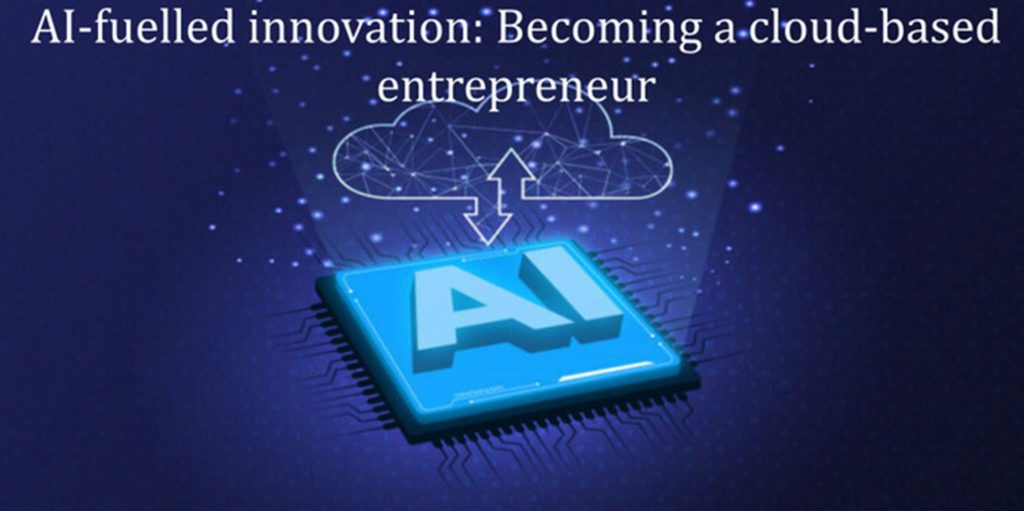
A comprehensive AI strategy that covers both internal operations and customer experiences require a high level of data maturity and machine learning (ML) capability across organizations, and many are using cloud-based machine learning architectures to support this type of program.
Let us look at the automobile industry as an example of how organizations could utilize the cloud for both customer and operational processes simultaneously. When a car owner’s dashboard indicates that a part needs to be replaced, a digital maintenance system sends an alert to the owner. In addition to providing the owner with the service station, the system also secures an appointment for the owner at the nearest station, which is a short distance away. After accepting the appointment, the owner follows the GPS to the service station, which has preapproved his insurance claim for the required part. Once the part has been purchased, the company’s inventory management system is automatically updated. Its cloud-based operations and user experience allow organizations to integrate AI everywhere.
As an AI-fuelled entrepreneur, data scientists, and chief data officers can leverage the cloud to provide AI to all parts of the organization.
Technology and Business Strategies for the AI-Driven Entrepreneur
To achieve the following business outcomes, a cloud-powered entrepreneur will implement the following strategy:
- The business operations and continuity management of remote workforces embrace everything from virtual workforces (such as bots that automate work) to advanced conversational AI with solutions that become more mature as time goes on.
- The intelligent edge or data intelligence is an essential element for an organization that wants to power machine learning solutions across the business ecosystem using a highly mature data strategy.
- The optimization and personalization of virtual experiences can be achieved while at the same time balancing micro-segmentation with a more holistic approach, using historical customer data and predictive analytics.
- An ecosystem built on digital technologies that connect customers, partners, and even regulators with one another is a powerful source of data for AI programs and supports stakeholder capitalism.
A truly AI-driven entrepreneur’s cloud innovation program would benefit from being:
- Distributed across an organization allowing data from different silos to be consolidated;
- Providing enhanced data interoperability and enhancing AI explainability through standards alignment;
- Infrastructures designed to move quickly to accommodate rapid advances in algorithms, hardware, and cloud ML strategies, without regard to vendors or models; and
- Cloud-based so all-cloud execution strategies provide the consistency and reliability needed with an AI-everything approach.
Markets continue to realize AI’s potential for improving customer service. Using automation to replace human-to-human interactions with human-to-machine interactions could result in improved customer service and increased trust. In part, this has been made possible by advances in conversational AI, which have made robust translations of speech to text possible. These capabilities can be leveraged on a scale not possible in the past with the cloud.
Changes in the Field of AI
Customer engagement, business partner engagement, and employee engagement are three of the main elements of any organization. Call centers or sending emails have been the traditional methods of communicating with these groups. Chatbots followed, whereby combining speech-to-text and text-to-speech technology, also known as conversational AI, the voices that respond sound more humanlike. Business engagement changed from human-to-human interaction to human-to-machine interaction. As humans interact with each other, these technologies augment their interactions, including automating repetitive tasks with the help of artificial intelligence.
It appears we are heading toward a time when human-to-human interactions will be limited to certain situations where chatbots are not optimal for dealing with unique requests. Through conversational systems’ engine in the background, machine learning disambiguates these calls and creates a knowledge graph. Graphing the predictability of responses leads to greater call containment (the solution to the caller’s purpose) and higher customer satisfaction.
AI Applications Enabled by Cloud Computing
Due to the elasticity of the cloud, its strong computing capability, and the availability of storage resources, these tasks can all be completed faster and more easily than ever before. Having access to open-source platforms helps data scientists easily analyze exploratory data and utilize prebuilt models. Demonstration of models’ capabilities can now be executed in a production environment before executing proofs-of-concept. The cloud environment facilitates this entire process, known today as MLOps. Conversational AI will soon be more widely adopted due to the power of the cloud, according to technology experts. In addition, it is imperative to follow stringent compliance and regulatory requirements in the integration of data with other systems. A combination of factors will make conversational AI successful, including improving data training and developing a strong governance process.