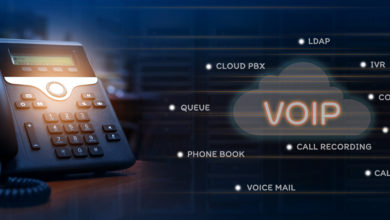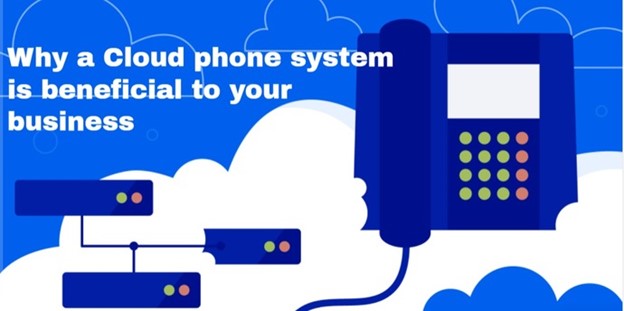
The phrase ‘cloud telephony’ is common to every company attempting to improve or digitize its phone infrastructure. The pandemic highlighted the rising relevance of cloud telephony and how it may assist organizations in running their phone operations from anywhere in the world without relying on telephony gear.
Why Cloud Telephony Matters After COVID-19
We’ll go over everything organizations need to know about cloud telephony and the important role it can play in the post-COVID future in this article. You will also learn how to make an informed decision before moving from their traditional phone system as a result of this procedure. You’ll find answers to your most urgent concerns regarding cloud telephony below, whether you’re starting a new firm or growing your team to achieve business goals.
What Is Cloud Telephony and How Does It Work?
Cloud telephony is a sort of unified communication as a service (UCaaS) that allows customers to utilize the Internet as a communication medium to execute telephonic operations. It eliminates the need for enterprises to invest in telephone gear by utilizing software applications as the telecommunications gateway. The phrase “cloud telephony” has gained prominence as a result of the widespread usage of cloud-based services for this purpose.
The mixing of numerous communication channels is known as cloud telephony. It’s basically internet-based communication that integrates phone, email, chat, and video to decrease or eliminate information. Through the Cloud, storage, applications, and switches are managed and hosted by a third party.
Small firms shifting their office space or increasing their staff in the past were frequently faced with issues such as higher costs for installing new telephone lines, delays in infrastructural setup, and so on. However, specialized service providers will handle the time-consuming setup process with cloud telephony.
How Did Cloud Telephony Contribute to The Pandemic’s Success?
The epidemic drove firms that were heavily reliant on on-premise storage to relocate. It was necessary for enterprises to implement digital solutions quickly in order to maintain operations and continue servicing clients with new priorities.
The pandemic also boosted the number of phone calls to customer service, as well as consumers’ patience for waiting on hold when connecting to an agent. To put it another way, businesses needed a whole new set of telephony tools and capabilities to survive the epidemic while simultaneously maintaining client relationships. This is precisely what cloud telephony allowed them to accomplish.
1. Use Call Conferencing to Bring Together A Large Number Of People:
It became difficult to provide seamless customer service when COVID altered the way offices could function and workers had to start working remotely. Call conferencing on a cloud-based solution connects your complete team from the comfort and security of their own homes to a centralized platform. Without having to meet face to face, team meetings, client calls, and even town halls may be planned.
2. Call Recording to Keep Track of Service Quality:
Because COVID made clients stay at home, all customer communication was handled through channels that didn’t require in-person engagement, such as phone assistance. However, as the number of tickets increased, it became increasingly important for firms to keep detailed call logs.
Businesses frequently struggle to forecast and comprehend their prospects’ and customers’ expectations. The call recording capability may also be utilized to go back and review previous calls and see trends. Agents are in a better position to handle client concerns and provide pleasurable service if they can understand their customers’ pain spots.
3. Use A Predictive Dialer to Increase Outbound Calls:
Outbound calls may be made easier with the aid of a predictive dialer. It’s utilized to dial numbers from a contact list that’s been entered into the system. If the call does not connect, it automatically dials the next number in the list, saving the caller from having to dial repeatedly.
4. IVR (Interactive Voice Response) Technology for Self-Service:
IVR stands for Interactive Speech Response, and it is an automated telephone system that interacts with callers using pre-recorded voice menus and directions. It captures caller input via dial-pad pushes and directs the call to accessible contact center operators or submenus.
This allows your company to categorize incoming calls and guarantee that a caller’s inquiry is resolved in the shortest amount of time feasible.
5. Support in Many Languages for Completely Localized Client Service:
Businesses are getting increasingly global. Nonetheless, most businesses aren’t multilingually prepared or have the resources to become so. Any company that wishes to reach a worldwide audience and gain a significant part of their target market must prepare to provide customer service in their native language.
Agents in BITS Secure IT Infrastructure can self-select their preferred language from the profile settings page. The default language in which your clients may view your support portal and help widget will be the major language.
The way forward is this: In a post-pandemic society, what function does cloud telephony play?
As millions more people withdraw into isolation, how businesses they rely on offer experiences that meet their needs with empathy and concern will become an important barometer of their customer experience.
Businesses have made significant progress in employing cloud infrastructure to support their workflows and business applications for safe and dependable distant operations, owing to the complicated hurdles posed by lockdowns and social distancing measures.
BITS Secure IT Infrastructure LLC offers customer care, sales, and remote working phone solution for businesses. Our cloud-based architecture combines the finest of traditional features like IVR with sophisticated call routing capabilities like Smart Escalations and Customizable Performance Reporting to enable you to build up cutting-edge phone operations. BITS Secure IT Infrastructure has phone numbers in more than 90 countries, doesn’t require any phone gear and is incredibly simple to use. Want to know more about our products and solutions, get in touch!
Ready to move to the cloud? Explore our unified communications solutions and our 3CX cloud phone system, and read our guide on common VoIP issues. For more, see this 3CX cloud PBX overview.
Frequently Asked Questions
What is cloud telephony?
Cloud telephony moves your business phone system to the cloud, letting you make and receive calls over the internet without on-site PBX hardware, managed through a web interface.
Why did cloud telephony become important after COVID-19?
The shift to remote and hybrid work made flexible, location-independent communication essential. Cloud telephony let teams stay connected from anywhere without office-based hardware.
What are the benefits of cloud telephony?
Benefits include lower upfront costs, easy scaling, remote and mobile working, fast setup, automatic updates, and advanced features like call routing and analytics.
Is cloud telephony secure?
Reputable cloud telephony providers use encryption and strong security controls. Combined with good network practices, it offers secure, reliable business communication.
Is cloud telephony suitable for small businesses?
Yes. Cloud telephony is especially attractive to small businesses because it minimises hardware costs and scales easily as the business grows.