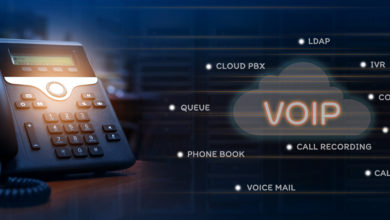
For many years, the global market for Voice over Internet Protocol (VoIP) services have been developing. VoIP is expected to be valued at $194.5 billion by 2024, thanks to the pandemic and other causes affecting digital developments in modern industry.
It’s obvious that VoIP and SIP Softphones are in high demand to replace traditional business communication systems, but did you know about the wide range of applications for the technology and how many various sectors are incorporating it into their everyday operations?
Let’s take a look at how different industries, including banking, telecom, education, and tourism, use VoIP services to their benefit.
What Are the Benefits of Softphones for Customer Service?
Any contact center or customer service department is an obvious use case for softphone technology. We frequently observe these personnel conversing with clients over the phone, thus it’s no surprise that boosting online LSC conversations improves the effectiveness of these teams.
What is it about VoIP apps that makes them so good for contact centers? The solution is found in the simplified form of work made possible by Softphone features:
- Multi-channel communications
- Integration with CRMs or workforce management software
- Call routing
- Logging
- Desktop interfaces and dashboards
The rising needs of customer service centers, sales, and technical support groups have necessitated the use of VoIP services with excellent dependability. If you want to handle increasing call volumes and meet better customer experience requirements without breaking the budget, VoIP is the only solution going forward.
Best of all, because VoIP is multi-channel, reps may connect with consumers not just over the phone but also through online forums, live chats, and other channels. It is critical to be adaptable to remain competitive.
Is Unified Communications Capable of Boosting e-Commerce?
Selling online has never been more successful, whether you’re an entirely online store or a brick-and-mortar store with an online component. There are plenty of eCommerce data to back this up, and the online buying trend is also driving up demand for digital communication.
Don’t forget about encounters with your consumers, who may have questions concerning:
- Order status
- Order cancellations
- Product/service inquiries
- Refunds
This final element is more essential than you would believe; 4 out of 5 clients are turned off by a difficult-to-understand return policy. Other capabilities, such as an auto-attendant, can link an incoming caller with a free agent as fast as possible, reducing irritation.
Finally, marketing teams will appreciate Softphones’ flexibility and speed when sending out mass emails and texts about new deals. The effectiveness of SMS and social media marketing can be attested to by marketing experts all over the world, and VoIP can assist with all parts of this online unified communication.
Education & Communication Technology
Have you ever heard the word “Edtech”? Education technology has been utilized to improve the quality of learning in a variety of settings, ranging from elementary schools to universities and professional courses.
The demands and difficulties of schools are so distinct that whole service providers are dedicated to meeting them. They use the benefits of Unified Communications to enhance daily operations, save money, and boost the reputation of the organizations they deal with.
Although the epidemic has increased the demand for remote education, the same tools and technology will continue to be a huge help to schools once campuses reopen.
What Can Unified Communications Teach Healthcare?
Hospitals are responsible for a variety of tasks requiring a variety of medical specialists. Clinics, nursing homes, geriatric care, and emergency departments are just a few examples.
VoIP is the solution to ensuring that everything runs well. Through smart answering machines, hospitals can rapidly transmit calls to the appropriate department, reducing patient wait times.
Softphones may also connect to enterprise-level software and solutions, such as electronic health record management. Digital platforms make it much easier to find the relevant patient information for a check-up.
Using Softphones to Start a Real Estate Business
Many realtors think that the real estate market is now a buyer’s market. Because customers have so many alternatives, maintaining good communication is critical to standing out.
For example, you may create a virtual phone number for yourself to use for various purposes. Another great feature is multimedia sharing, which allows you to share photographs of the property without having to use another site.
Today’s telecom companies want more features and integrations than ever before. VoIP softphones, particularly in the telecom industry, are an essential aspect of future corporate communication. They may work with upcoming technologies like as artificial intelligence and machine learning, as well as new mobile networks such as 5G.
Don’t allow your communication capabilities to hold you back when your company begins to engage with partners and entities from all over the world. VoIP softphones can fill the gap when previous telephony systems fail due to voice and data service standards.
Communication Technology’s Impact on Travel and Tourism
Because of the easing of pandemic restrictions, travel and tourism are now starting to recover. The benefit of softphones should be evident at this point: the absence of international charges is ideal for travel agents.
Answering client questions is a lot simpler to budget owing to VoIP, even if the consumer is thousands of miles away. As a result, it’s easier to arrange an itinerary and respond to travel requests.
The airline industry is one part of the travel business. Air travel has long been a big part of international leisure and trade, but it’s also known for having terrible customer service and communication. In today’s fast-paced world, old telephone systems can’t keep up.
While airlines have had some difficulty a few years as a result of COVID-19, it’s clear that those that opted to engage with VoIP service providers fared far better, owing to improved client communication, workforce flexibility, and overall, more seamless customer experiences.
To learn more about how Cloud Softphone may help you dominate communications in your business, niche, or use case, schedule a meeting now with BITS Secure IT Infrastructure.